
Tesla Powerwall vs Sungrow Battery: Central Coast Comparison
Tesla and Sungrow sit among the most recognised battery names on the Central Coast, and homeowners weighing up storage often end up comparing the Powerwall against Sungrow's modular range. Both are proven products with strong track records in Australian conditions, yet they take quite different approaches to capacity, installation and system design. This comparison sets out the practical differences in a balanced way, so households around East Gosford and Brisbane Water can work out which philosophy fits their home, their existing solar and their plans for the future.
Capacity and scalability
The Powerwall follows a fixed capacity approach. Each unit provides a set amount of usable storage, generally around thirteen and a half kilowatt hours, and households wanting more simply add further complete units. That makes sizing straightforward for a typical family home, though the jumps between capacity levels are large. Sungrow takes a modular path instead. Its batteries are built from stackable modules, so a system can start smaller and grow in modest increments as needs change, with a single stack able to reach well beyond twenty kilowatt hours. For a household unsure how an electric vehicle or induction cooking might change consumption, that incremental flexibility is genuinely useful. For a household that knows its numbers, the Powerwall's all in one sizing keeps things simple.
Battery chemistry and design
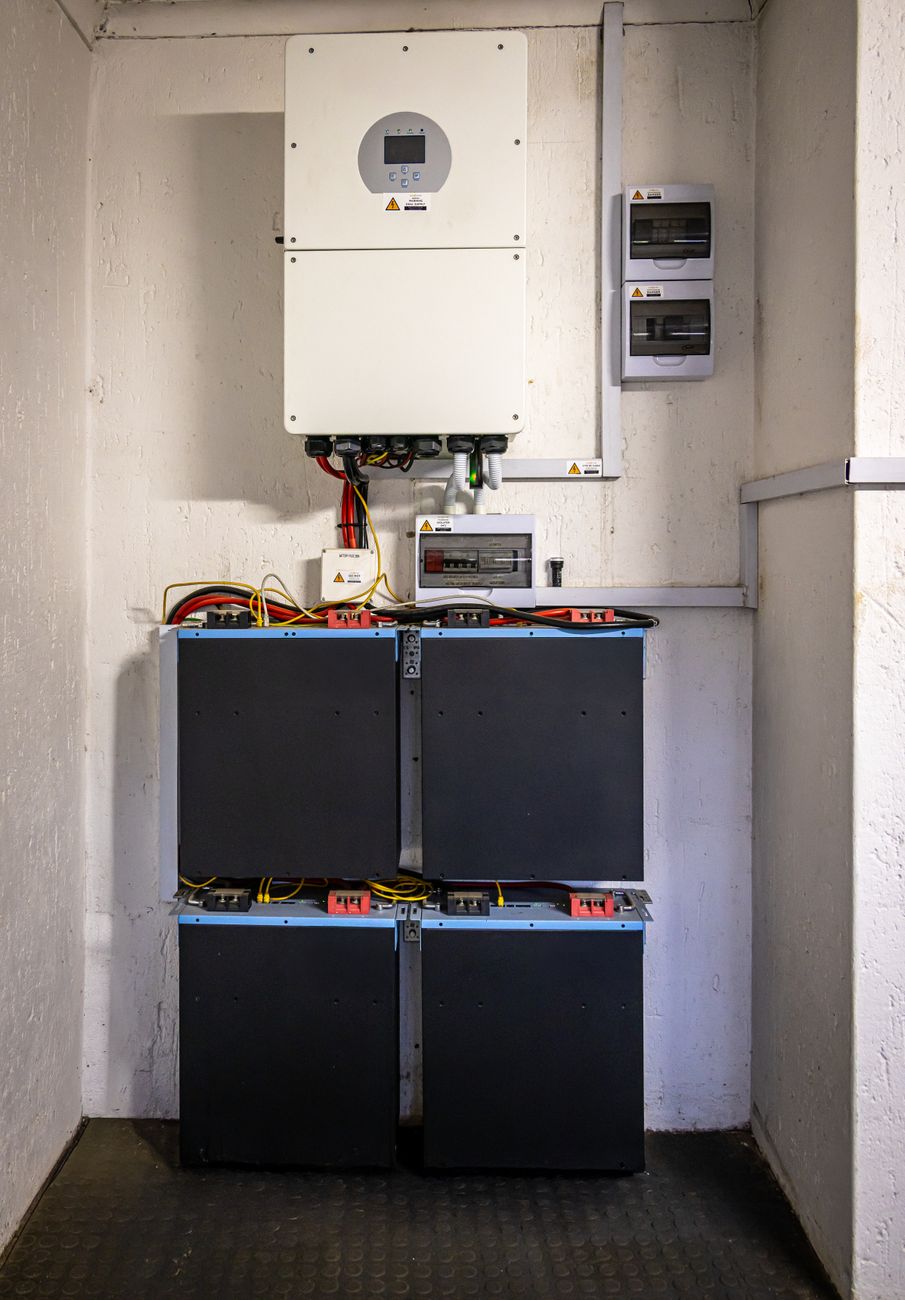
Both manufacturers now favour lithium iron phosphate chemistry in their current products. It tolerates heat well, cycles reliably and is widely regarded as a stable choice for residential storage, which matters through humid Central Coast summers. Earlier Powerwall generations used a different lithium chemistry, so buyers comparing older stock with new should check the specification sheet. Physically, the Powerwall is a single sealed unit with a distinctive finish that many owners are happy to mount in view. Sungrow stacks sit on a floor base with modules layered beneath a control unit, a more utilitarian look usually placed in a garage. Both carry weather ratings that allow outdoor installation in a shaded, protected position.
Inverter compatibility and installation
This is where the two brands differ most. Recent Powerwall models integrate their own inverter, and earlier AC coupled versions were famously easy to retrofit alongside almost any existing solar system, which made them a favourite for homes with panels already on the roof. Sungrow batteries are DC coupled and designed to pair with Sungrow hybrid inverters, so they shine brightest in a matched Sungrow system, either installed together from day one or added where a compatible hybrid inverter already exists. Sungrow also offers well established three phase hybrid options, which suits larger homes with three phase supply. Because compatibility determines cost and complexity, a licensed electrician should confirm what the existing inverter and switchboard can support before a brand is chosen.
Backup power and monitoring
Both systems can keep a home running during a blackout, a real consideration given the storms that roll across Brisbane Water each year. The Powerwall manages backup through its gateway hardware, switching over quickly enough that most occupants barely notice, and it can cover whole home backup where loads are managed sensibly. Sungrow provides backup through its hybrid inverters, with dedicated backup circuits configured at installation. On monitoring, Tesla's app is widely praised for its clean design and features such as storm watch, which pre charges the battery ahead of severe weather warnings. Sungrow's iSolarCloud platform offers detailed system data that suits owners who like digging into the numbers.
Warranty and support
Warranty terms are broadly comparable. Both brands back their residential batteries for around ten years, with a guaranteed level of retained capacity at the end of the period, subject to fair use conditions set out in the fine print. Sungrow maintains a substantial Australian support presence and its equipment is serviced by a wide installer network. Tesla support runs through its app and certified installer channels. In both cases the installing electrician is the first point of contact, so the quality and longevity of the local installer matters as much as the badge on the box.
Frequently Asked Questions
Can either battery be added to an existing solar system?
Often, yes, but the pathway differs. AC coupled Powerwall units retrofit readily beside most existing systems, while a Sungrow battery generally needs a compatible Sungrow hybrid inverter, which may mean replacing the current inverter. An on site assessment confirms the simplest route for a particular home.
Which battery suits a three phase home?
Both can work on three phase properties, but the design details differ. Sungrow's three phase hybrid inverters allow tightly integrated setups, while Powerwall installations on three phase homes typically back up selected circuits on one phase. An electrician can map the switchboard and advise which arrangement fits.
How long does a home battery installation take?
A straightforward single battery installation is usually completed within a day, covering mounting, wiring, backup circuit configuration and commissioning. Jobs involving switchboard upgrades, inverter replacement or complex backup arrangements can stretch further, and network approval should be arranged before installation day.
Do both brands work with virtual power plants?
Yes. Both Tesla and Sungrow batteries are accepted into various Australian virtual power plant programs, which reward households for allowing brief network support events. Program availability changes by retailer and region, so it is worth checking current offers on the Central Coast before committing.